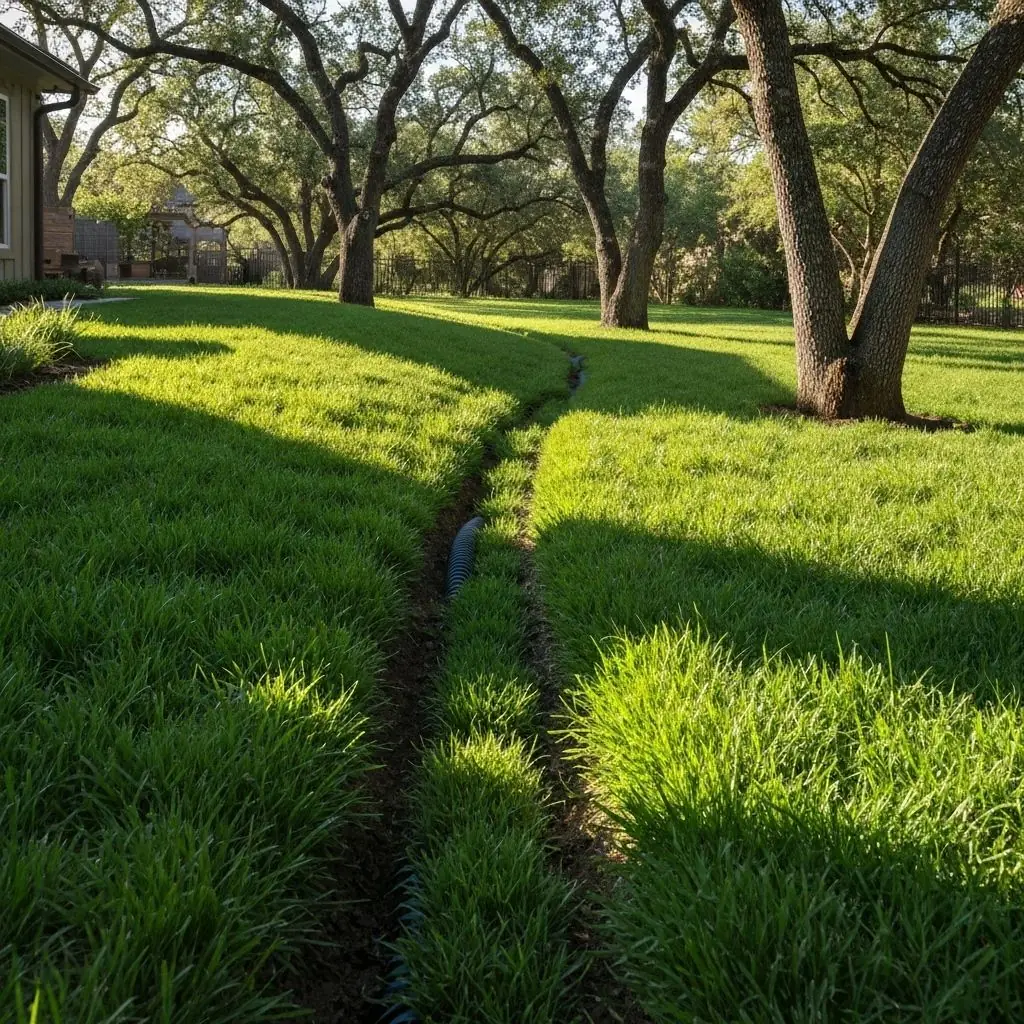
Memphis summers hit drainage systems from two directions. The heat, 95°F with 85% humidity on a typical July afternoon, degrades seals and causes pipes to expand and settle. Then a storm rolls in and drops two inches in forty minutes. Systems that were marginal in spring don't always survive that.
Most failures we see in summer weren't caused by the storm. The storm just revealed a problem that had been building for months.
Before storm season peaks
The right time to go through your drainage system is May, before the worst of the summer heat and storms. By July it's harder to schedule service, and there's no buffer between you and the next rain event if something turns out to need work.
For French drain systems, the main thing to check is whether outlets are clear and flowing. Summer brings aggressive weed and vine growth that can block discharge points in a few weeks. Run a hose into the inlet and watch the outlet: water should flow within a minute or two. If it trickles or backs up, there's a blockage or the system is silted.
Catch basins are the most neglected part of most drainage setups. Through spring they collect leaf debris, mulch, sediment from the clay, and whatever the winter washed in. By June, a lot of them are half-full. Pull the grate, look inside, and pump or scoop out what's in there. Standing organic matter in summer heat also becomes a mosquito breeding site, so this isn't just a flow issue.
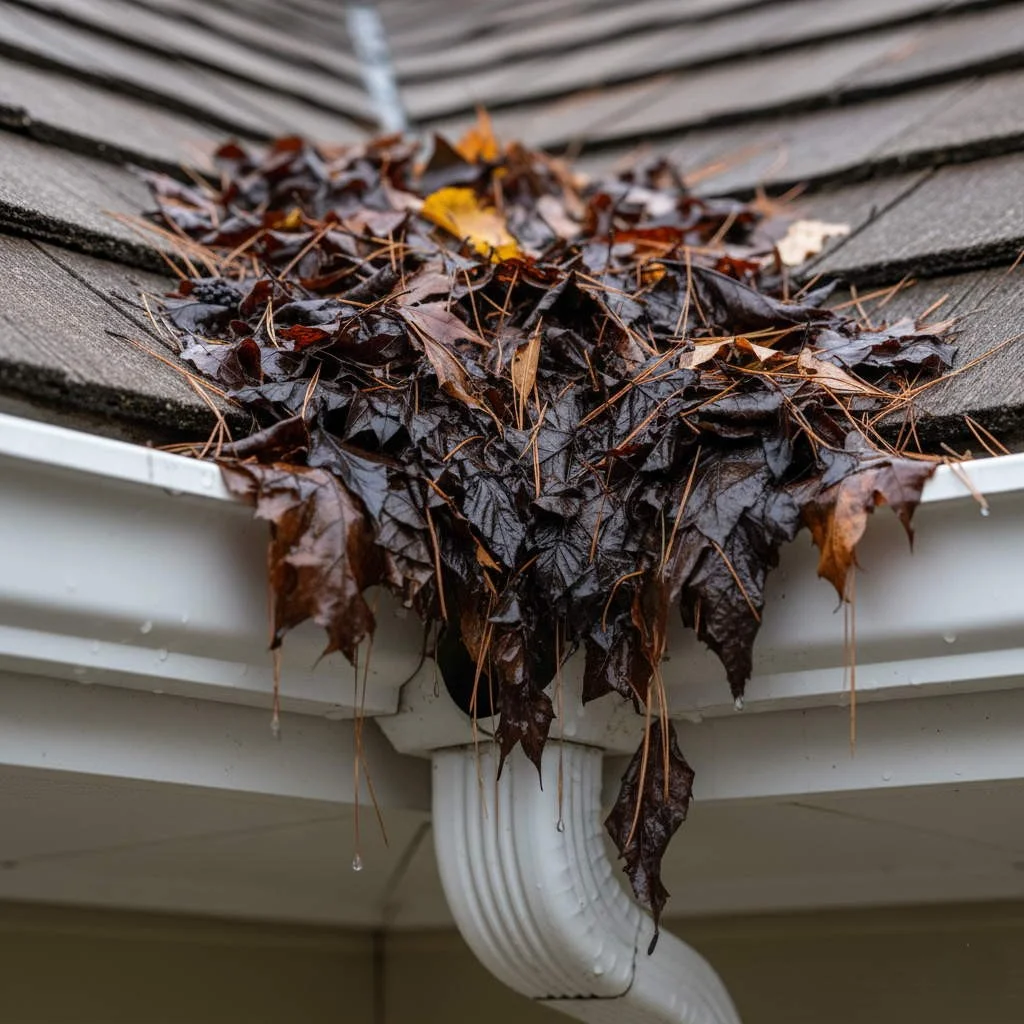
Gutters matter more in summer than most people expect. Summer storms are short and intense. A gutter that's 30% blocked by compressed spring debris will overflow on a 1-inch-per-hour rain even if it handled spring fine. Clean them in late May and again after any storm that drops a lot of debris.
Sump pump testing should happen before the season, not during it. Fill the pit with a garden hose until the float kicks the pump on, and listen for grinding or laboring. If you have a battery backup, test it by disconnecting main power. The middle of a summer thunderstorm is not when you want to find out the battery hasn't held a charge.
Pre-season checklist
- Run a flow test on French drain inlets and outlets
- Clean out catch basins and check grates for damage
- Clear gutters of spring debris; check for sags and loose hangers
- Test sump pump and battery backup
- Trim vegetation back from all drain components
What to watch during storms
Once storm season is active, walk your property during a regular summer shower. Not during lightning, just during an ordinary rain.
Watch where water ponds first, whether gutters overflow at any point, and where downspouts actually discharge. You'll learn more in twenty minutes of moderate rain than in any dry-day inspection. After significant storms, anything over an inch in an hour, check catch basins and drain inlets. Storms that move fast carry debris. A basin that normally fills gradually can get most of the way there in one event.

Vegetation
Summer growth in Memphis is relentless. Grass and weeds push into catch basin grates, vines creep over French drain outlets, and roots find any joint or crack they can reach. Ten minutes a month checking around drain components prevents the kind of slow blockage that only shows itself during a storm.
If you have trees near drainage lines, root intrusion is a warm-season problem specifically. Roots grow actively in summer heat. If you've had issues before, a camera inspection every few years is cheaper than the repair when a root finally finds its way through.
Heat is a drainage problem, not just a comfort problem
Memphis typically sees somewhere between twenty and forty days above 90°F in a summer, and the effect on Shelby County clay is not cosmetic. The smectite in our loess loses volume as it dries, and a yard that was saturated in April can be laced with shrinkage cracks by mid-August. Those cracks are not just surface damage — they are open channels.
That matters for two reasons. First, when the next real storm arrives, water does not spread evenly across the lawn and soak in. It finds the cracks and travels straight down, often right alongside the foundation, delivering a concentrated load exactly where you least want it. Second, the same shrink-and-swell cycle works on buried pipe. Joints that were tight in spring can pull slightly out of alignment by late summer, and a drain line that has lost its consistent fall will silt up faster from that point on.
The practical response is to keep soil moisture as even as you can through a drought. Watering the ground within a foot or two of the foundation during extended dry stretches sounds counterintuitive on a page about drainage, but it prevents the soil from pulling away from the house in the first place. Slow and light is the goal — you are maintaining moisture, not irrigating.
What summer maintenance cannot fix
Cleaning is worth doing, and it prevents a real share of failures. But some symptoms are design problems wearing a maintenance costume, and no amount of grate-clearing will touch them. Be honest with yourself about which one you have.
- Water ponds in the same spot no matter what you clean. If the basins are empty and flowing and the low spot still holds water for a day, the yard has nowhere to send it. That is a grading or capacity question.
- The outlet sits at or below the surrounding grade. A drain line can only work if its discharge point is lower than its inlet. Outlets that were correct at install can end up buried by years of mulch and settling.
- The system runs completely full during ordinary rain. A pipe running at capacity in a routine shower has nothing left for a real storm. That is undersizing, not debris.
- Water reappears within an hour of a flow test clearing. Usually groundwater rather than surface runoff, which is a different system entirely.
Each of those is worth a professional assessment rather than another Saturday with a shop vac. The distinction matters financially, too: maintenance you can do yourself, but repeatedly paying someone to clean a system that was never sized correctly costs more over a few years than fixing it once.
Related guides:
Warning signs that need a call
Some things aren't surface maintenance problems. Water backing up during an ordinary summer shower, not a freak event, usually means the system is undersized or blocked somewhere a grate cleaning won't reach.
Call a professional if you see:
- Water backing up during a moderate, ordinary rain
- Sump pump running continuously after rain stops
- Catch basins filling faster than they drain
- Standing water still there 24 hours after a storm
These need diagnosis. And summer is a reasonable time to schedule that work. Lead times on materials are shorter than fall, ground conditions are good for excavation, and if you've been watching a drainage problem for a year wondering when to deal with it, this is the window.
A summer routine that actually holds up
The version of this that works is short enough that people actually do it. Once in May, walk the whole system: flow-test the French drain, open every catch basin, clear the gutters, test the sump pump and its backup. Once a month through the season, spend ten minutes trimming vegetation back from grates and outlets. And after any storm that drops more than an inch in an hour, check the basins and inlets, because fast-moving water carries debris that a gentle rain never would.
That is the whole program. What it buys you is the ability to tell the difference between a system that needs cleaning and a system that needs rethinking — and to find that out in May, when you have time to act on it, rather than during the storm that finally overwhelms it.
Free Download
Not sure if your yard needs a French drain or catch basin?
Download our free Memphis Drainage Checklist — 7 signs your yard is silently damaging your foundation, with urgency ratings and what each sign means. Memphis-specific, no fluff.
No spam. Unsubscribe any time.
Is your yard showing any of these signs?
Tell us what's happening — we'll tell you exactly what it needs and what it costs. Most Memphis homeowners get an answer within minutes.